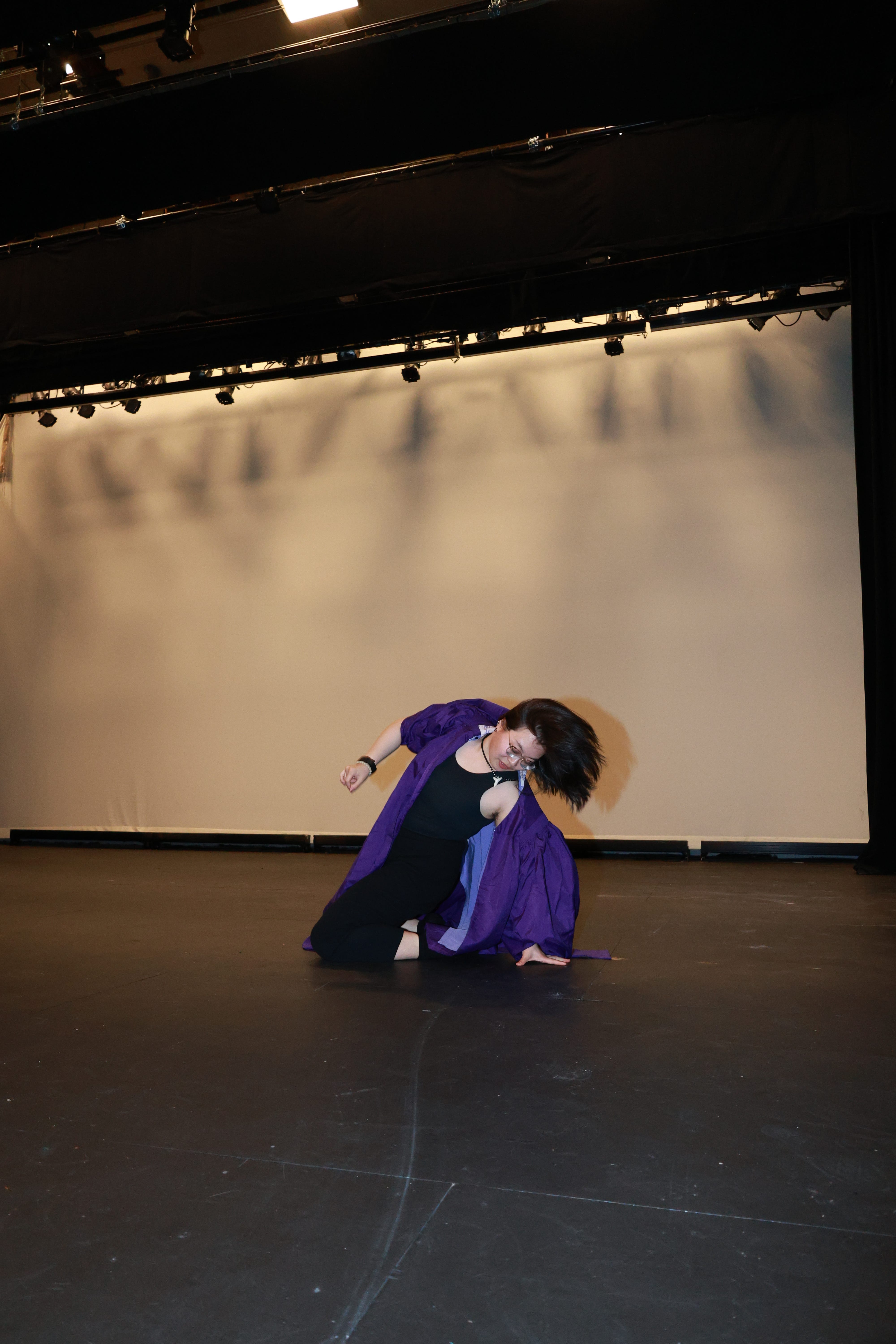
How Language Moves Through Theater and The World with Xuan Zhao (Part Two)
Part Two of a Three Part Series

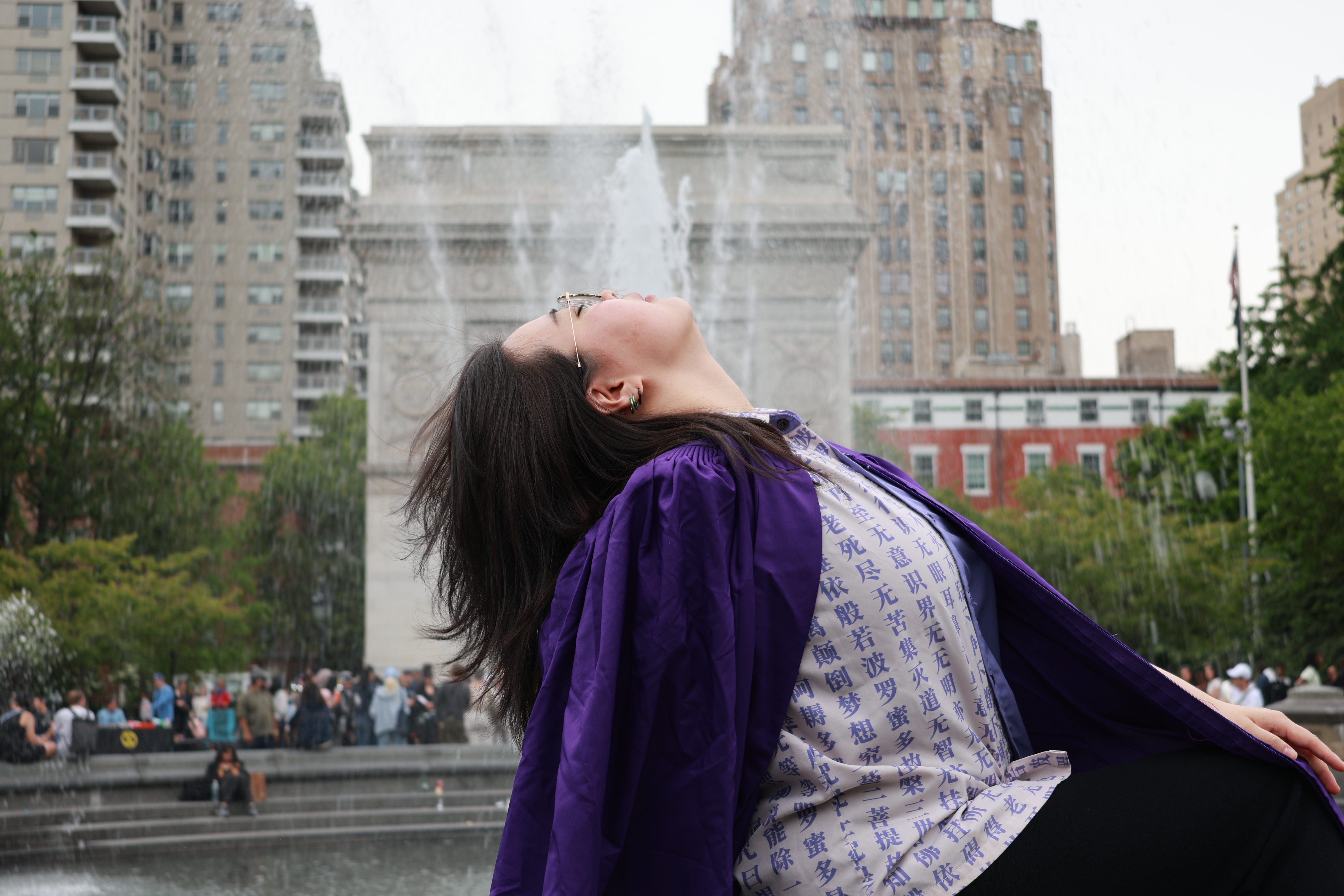
When we first met Xuan Zhao, she was describing play as a delivery system for truth—an idea that quietly reoriented everything that followed. In the opening part of this interview, she spoke about making spaces where learning becomes embodied, where stories wait until they can be told without distortion, and where improvisation functions not only as a technique but as an ethic. She resisted fixed identities, letting performer, educator, and researcher blur into a single, curious practice, and reminded us that language has never lived only in the head. It has always belonged to the body first.
This second part of the conversation widens the frame. If the first installment focused on how Zhao builds rooms for learning and storytelling, this one asks what happens when those rooms fill with different kinds of people, expectations, and pressures—and how an artist learns to stay sustainable inside them.
Zhao begins by distinguishing between the energy of an audience that has come to watch and one that has come to learn. Theater audiences arrive ready to be carried; classrooms require participation, risk, and effort. The difference is subtle but consequential. It reveals how attentively she reads a room, how carefully she modulates energy depending on whether she is holding attention or inviting action. In both cases, the work is relational. Nothing is static; everything responds.
From there, the interview moves into questions of responsibility and representation, particularly around Asian and diasporic identity in comedic spaces. Zhao’s answer is disarmingly calm. She refuses the pressure to perform identity as spectacle, insisting instead on presence as its own form of representation. Simply occupying the space, fully and unapologetically, does the work. This stance—neither avoidance nor overstatement—feels consistent with her larger philosophy: truth is not something you declare, but something that arrives when conditions are right.
That trust extends to her research practice as well. As the only practitioner currently applying improv to Chinese language acquisition, Zhao is building a field even as she is still discovering her own questions. She speaks of this not as a burden but as a joy, an honor. The tone matters. There is no anxiety about being first, only gratitude for being allowed to explore.
Failure, too, is reframed. When asked about moments that collapsed in public and later became foundational, Zhao gently rejects the premise. Success and failure, she suggests, are stories we tell after the fact; experience itself is the teacher. That mindset—absorbing everything without categorizing it as win or loss—has become a cornerstone of her practice, and perhaps a quiet form of freedom.
Dance enters the conversation as another kind of knowledge system. The body, she explains, often understands before the intellect does. It remembers through habit, through sensation, through instinct. In easy moments it executes; in hard ones it decides; in extreme ones it survives. This bodily intelligence underpins everything she makes, from her teaching to her comedy to her choreography, reminding us again that thinking is not always cerebral.
As the conversation turns toward sustainability, the tone shifts slightly, deepening. Zhao speaks candidly about burnout, about the way early-career artists romanticize exhaustion, and about the slow realization that rest is not a betrayal of passion but its fuel. This insight connects directly to her redefinition of success. In a world obsessed with metrics, she offers a quieter measure: joy, completion, the sense that time has not been wasted. Art endures, she reminds us, precisely because it is “useless” in the most essential ways.
The installment ends with an act of letting go: the belief that everything must be done. Choosing, she says, is now part of the work. And in that choice, her practice grows sharper, lighter, more alive.
LIAM:
You’ve performed in spaces ranging from Off-Broadway theaters to language classrooms. How does an audience’s intention—to be entertained versus to learn—change the energy in the room?
XUAN:
This is an interesting question. Theater audiences come to watch a performance, while students in a classroom come to learn. Theater-goers can relax, enjoy, and let themselves be immersed, whereas learners need to actively participate. So the energy in the room is definitely different.
In live performance, the energy is constantly shifting, moment to moment. In the classroom, each participant brings their own personality, so the energy naturally varies as well.
LIAM:
As someone working at the intersection of culture and pedagogy, how do you think about responsibility when representing identity, especially Asian and diasporic experiences, through comedy?
XUAN:
I might give an answer that’s a bit different from the usual. As someone who wasn’t born in the U.S., I can understand but also notice how frequently culture and race are foregrounded in American contexts. Before thinking about “working at the intersection of culture,” I was just like anyone else: we laugh, we cry, we care.
Naturally, as a member of my own cultural group, my actions can be unconsciously read as “representative” by those outside that culture. And having come to the U.S., I’m automatically categorized as part of a minority, non-mainstream cultural group. In my experience, people often overemphasize or perform aspects of their cultural identity, which is understandable.
This isn’t about this question itself, it’s just something I’ve observed in my own journey. I don’t see representing identity as needing to do something overtly “Asian.” On stage, in my creative work, or in theater classrooms, I will share parts of my experience or fill in perspectives others might not see if needed. But I also believe my very presence in these spaces is powerful enough.
Being there, as myself, is already a form of representation.
LIAM:
You’re the only practitioner currently applying improv specifically to Chinese language acquisition. What does it feel like to build a field while still actively discovering your own questions?
XUAN:
It just feels really awesome. I’m honored and lucky to be doing this.
LIAM:
What’s a moment in your career when something failed in front of people—and later became foundational to your practice?
XUAN:
The concept of “failure” is really subjective whether something “succeeds” or not, it always becomes a valuable experience and story. I realized this early, when I first decided to step on stage and express myself in front of people. Of course, if things didn’t go as expected, it could be frustrating or disappointing but I never carried a fixed notion of success or failure. I see everything as contributing to my growth. That mindset itself has become foundational to my practice.
LIAM:
Dance has clearly shaped your sense of rhythm and discipline. How does your body hold knowledge differently than your intellect does?
XUAN:
I love this question! Often, we rely too much on the mind, but the body sometimes responds to emotions before our intellect even catches up, like tears welling up unexpectedly, or getting goosebumps. For example, when I watch some of my own choreography, I can’t always put it into words, but I just know I’m already a great artist haha!
The body also holds knowledge through habit: once a good habit is established, it’s followed effortlessly. In different circumstances, the body guides me differently: during easy times, it reflects effort and execution; in challenging times, it informs decisions; and in extreme situations, it relies on survival instincts.
LIAM:
Many early-career artists struggle to reconcile creativity with administration. What’s something you’ve learned about sustainability that you wish artists talked about more openly?
XUAN:
For me, sustainability comes down to life-work balance. Early-career artists are incredibly lucky, excited, and passionate about their work. It’s easy to throw yourself into your projects and think, “Living is creating!” and inevitably, if not your mind, then your body will burn out.
Artists, especially those deeply in love with their work, often see work and life as inseparable. This isn’t that the conversation about balance isn’t open, it is, but we often don’t recognize it as a problem. In fact, overextending ourselves can even be admired as a sign of dedication or talent. People will brag about surviving four days on just 13 hours of sleep because of a beloved project.
I only recently realized this isn’t sustainable. I’ve learned that work and life can be separated, and that rest is not the enemy: it’s a source of inspiration and creative energy.
LIAM:
In 2025, creativity is often asked to justify itself through productivity or metrics. How do you define success when no one is counting?
XUAN:
This is a great question. I believe it’s not just a question for 2025 (time flies, and now it’s already 2026) but creativity has always had to justify itself, and every era finds its own answers.
On a broader scale, I often think of a Chinese saying: “The usefulness of the useless is the greatest use.” Historically, art- singing, dancing, painting, and more- has no direct productivity in terms of survival or basic utility. By simple evolutionary logic, such things shouldn’t have lasted. But they have, passed down through generations, each time evolving and innovating.
Their value lies beyond immediate utility. It’s precisely because they’re profoundly beneficial in less tangible ways that they endure.
For example, when I look back on my own work, what stays with me are the pieces I completed, the creations that make me feel these years weren’t lived in vain. On a personal level, if something brings you joy, that is enough. Enjoyment itself can be more meaningful than “meaning.” Fun is, in a way, its own kind of success.
LIAM:
What’s a belief about learning—or art—that you once held very tightly, but have since had to let go of?
XUAN:
I had to let go of the belief that I could, or should, do everything. For a long time, I tried to pursue every idea that seemed worth doing, putting them all on my timeline and working on them. Inevitably, some ideas felt urgent or “must-do,” while others lingered in between. Those “in-between” ideas often became obstacles, making me feel like I had to do everything, pushing me to exhaustion.
What I’ve realized is that the work people remember, or the work that truly matters, is usually the “must-do” projects, not every single idea that seems worthwhile. This year, one of the most important lessons for me has been accepting that I cannot do it all, and learning how to choose, let go, and focus on what really counts.